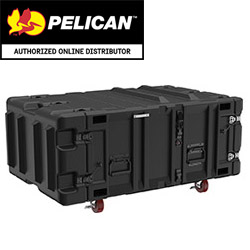
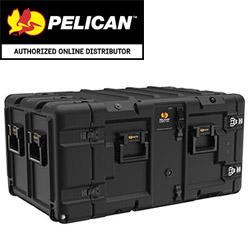
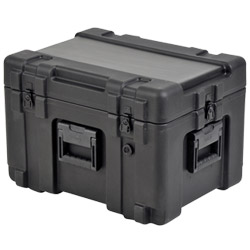
Choosing the right case comes down to three questions: what you’re protecting, how many units you’re moving, and how rough the trip will be. AllCases builds and stocks rugged cases for equipment of nearly every size, so the starting point is matching case capacity to your gear.
Capacity and sizing. Single-unit cases suit techs and travelers carrying one piece of equipment that still needs airtight, drop-rated protection. Multi-unit cases carry several units in slotted foam, ideal for IT departments, training rooms, AV crews, and rental fleets. Measure your equipment’s dimensions and closed thickness first; foam slots are cut to the device, so undersizing won’t safely hold a bulkier unit. Foam inserts. The foam is what actually protects the hardware. Custom-cut foam holds each unit in its own recess so nothing shifts in transit, and can be configured for cables, chargers, and accessories. If your equipment mix changes over time, ask about pluck foam or a reconfigurable layout. Wheels and handles. Once a case holds more than a few units it gets heavy fast. Most multi-unit cases ship with wheels and a telescoping handle so one person can move a full set through an airport or across a campus.
Protection level. For gear that flies or ships freight, look for waterproof, dust-sealed, MIL-SPEC-rated shells that resist crushing, moisture, and pressure changes. Moving equipment only between offices? A lighter-duty case may be enough — a specialist can help you avoid over- or under-buying. Stock vs. custom. Many cases here can be built to order around your exact equipment and quantity, so listed prices are starting estimates and lead times may apply. If you don’t see your configuration listed, use the Case Finder or request a quote.
FAQ
Common questions
How do I know what size case I need?
Start with what you’re protecting: measure its length, width, height, and weight, then check that against the case’s interior dimensions. If you’re moving multiple units, look for a case with slotted foam sized to fit each one individually. Not sure? Request a quote and a specialist can help you match the case to your equipment.
Can a case be custom-built to fit my exact equipment?
Yes. Most cases in this category can be built to order with foam cut to your exact equipment and quantity, so listed prices are starting estimates and lead times will vary. If you don’t see your configuration listed, use the Case Finder or request a custom quote.
Are these cases waterproof and crushproof?
The hard-shell cases in this category are watertight, dust-sealed, and crush-resistant, and many are rated to MIL-SPEC standards for shipping and air freight. If you’re only moving equipment between offices or job sites, a lighter-duty case may be all you need — a specialist can help you match the protection level to how the case will actually travel.
Do larger cases come with wheels?
Most cases built to carry multiple units or heavier equipment ship with wheels and a telescoping handle, since a fully loaded case gets heavy fast. Smaller, single-unit cases are typically carried by handle.
What's the lead time on a custom case?
Stock configurations typically ship faster than custom builds. Because many cases are built around your exact equipment and foam layout, listed prices are starting estimates — request a quote for a firm timeline on your configuration.
Can these cases be shipped via FedEx or UPS?
Yes — cases are padlockable and built to exceed ATA 300 (Air Transport Association) specifications, making them suitable for FedEx, UPS, or freight shipment.